New data reveals early warning systems failing WA children as wellbeing declines


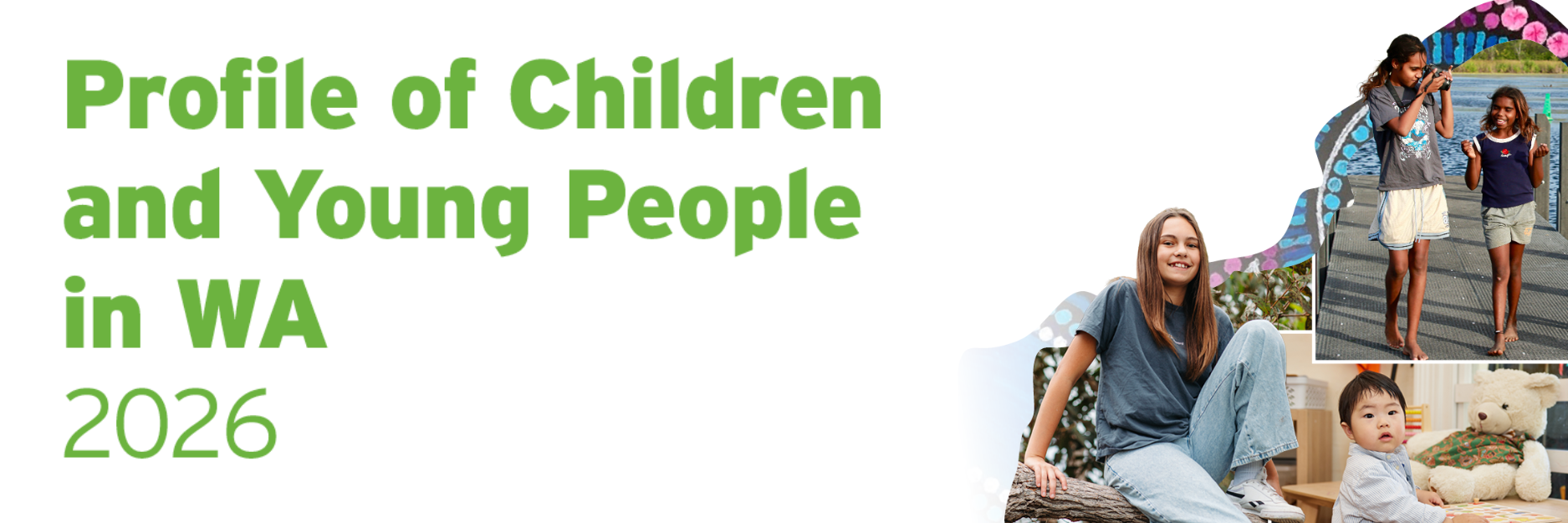
The Commissioner for Children and Young People, Dr Jacqueline McGowan-Jones, has released the '2026 Profile of Children and Young People in WA', revealing a pattern of declining mental health, rising developmental concerns, and increasing numbers of children falling through gaps in early-identification systems.
There are some excellent programs already in place to support WA children and families but these need expansion and continued focus to improve the lives of young Western Australians.
For the first time, the Profile report includes preliminary findings from the Commissioner's Speaking Out Survey, conducted in 2025, offering direct insight into how WA children and young people in Years 4–12 are coping.
Key concerns highlighted in the 2026 Profile:
- WA's 2024 AEDC results show alignment with the rest of Australia, rather than leading the nation in positive outcomes.
- The largest drops were in social competence (-4.6%) and emotional maturity (-4.1%).
- Despite clear evidence that early detection improves outcomes, less than one-third of Perth children receive their two-year-old child health check.
- In 2024–25, 139 children aged 10–13 were held in detention, none of them sentenced.
Declining mental health is a consistent theme throughout the Profile, affecting key areas of learning, behaviour, safety and wellbeing. This has also been a trend in the Speaking Out Surveys conducted since 2019. Rising school suspensions, growing disengagement from school, and early insights from the latest Speaking Out Survey, which will be released later this year, all point to escalating distress among children and young people.
But it is not all bad news. Teen pregnancies have halved since 2024 and the percentage of women smoking or drinking during pregnancy has roughly halved since 2013, with WA faring better than the rest of the nation.
Read the full Profile on our website.
Quotes attributed to Dr Jacqueline McGowan-Jones, Commissioner for Children and Young People
"When we fail to pick up early signs that a child is struggling, we are not just missing a moment, we are setting the stage for far more serious harm," Dr McGowan-Jones said.
"School exclusion, youth offending and long-term mental health challenges are the predictable outcomes of problems we could have addressed with early intervention.
"Western Australia cannot keep responding at the crisis end. We need urgent, coordinated action that starts well before a child reaches breaking point. Prevention is not optional – it is the only way to turn these trends around.
"Our systems are designed to intervene when children are already in distress and that must change.
"We need to shift our investment and our attention upstream, to the earliest years of life, where the right support can alter a child's entire trajectory.
"I urge Government to continue its investment into supporting children, young people and their families as early as possible."
Media contact: Megan Sadler - 0434 327 804 / megan.sadler@ccyp.wa.gov.au